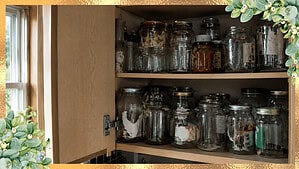
There’s a cabinet under my kitchen counter that’s full of empty glass jars.
Mason jars. Pickle jars. Pasta sauce jars with the labels half-peeled off.
I have at least thirty of them.
I’ve used maybe four in the last decade.
(Three for buttons. One to bring soup to a sick neighbor.)
But I keep them.
What if I make jam someday?
What if I start canning?
What if a friend needs a vase in a pinch?
That’s the thing about “just in case” clutter.
It isn’t really about the items.
It’s about a small fear in the back of your brain that says: what if you need this and don’t have it?
My mother kept jars too.
She washed every pasta sauce jar and lined them up on a basement shelf.
She grew up during the war years. Her mother grew up during the Depression.
To them, throwing away a perfectly good glass jar wasn’t just wasteful. It was reckless.
I inherited that thinking from them. Without ever knowing I had.
And once I started seeing it, I realized something.
The jars were just the beginning.
“Just in case” was hiding in every drawer, every closet, every corner of my house.
Where the “Just in Case” Habit Comes From
Most of us didn’t decide to start saving things “just in case.”
We picked it up the way you pick up an accent.
From the people we grew up around.
If you grew up in an American home in the 1960s, 70s, or 80s, your parents almost certainly came of age during the Great Depression or right after the war.
That kind of scarcity gets passed down, even when the dollars stop being scarce.
The mother who saved every twist tie.
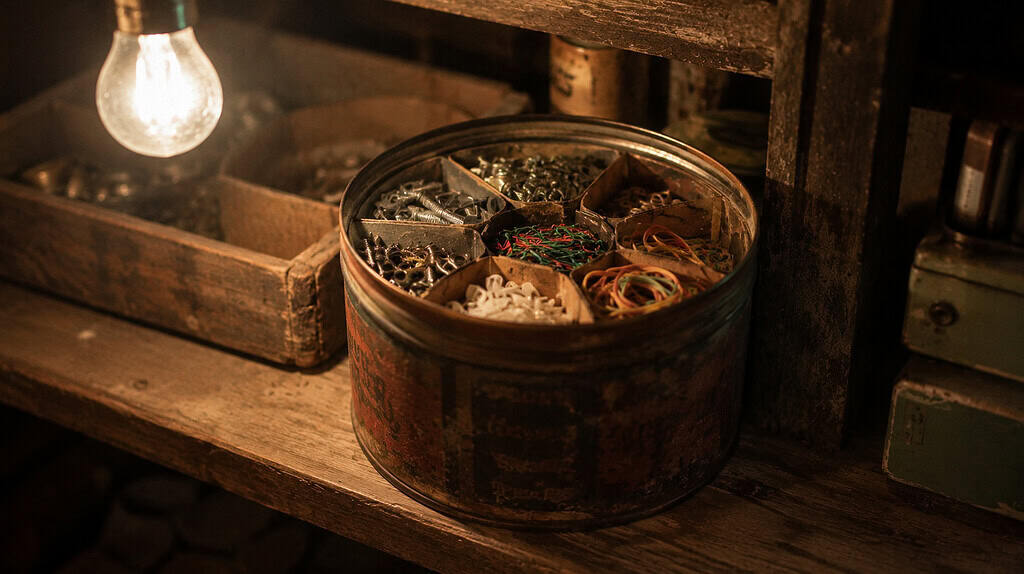
The grandfather who kept every screw in a coffee can in the garage.
The aunt who washed and re-used aluminum foil.
You learned, without anyone sitting you down to teach you, that throwing away something usable was wrong.
It wasn’t wasteful. It was something close to disrespectful.
So you held on too. (Not on purpose, but as a habit.)
The world your parents lived in isn’t the world we live in now.
The fears that built the “just in case” instinct were real for them.
Real shortages. Real deprivation.
Those fears keep running in your brain, even though most of them haven’t applied for fifty years.
There’s also a quirk of the brain at work.
Researchers call it loss aversion.
Your mind treats the possible loss of something useful as a bigger event than the actual loss of the space, the time, and the energy that thing is costing you right now.
So the empty jar on the shelf isn’t just a jar.
It’s an insurance policy against an imagined future.
And you’ve been paying the premiums on that policy for thirty years.
The future you bought it for has, mostly, never come.
Once I started seeing this pattern in my own home, I started seeing it everywhere.
In ten different categories of stuff, all over the house.
10 Categories of “Just in Case” Stuff You Probably Have Right Now
These aren’t the things you remember buying.
They’re the things that accumulated while you weren’t paying attention.
Each one earns its place by promising to be useful someday.
(The “someday” almost never comes.)
1. The Tupperware Drawer (And All Those Mismatched Lids)
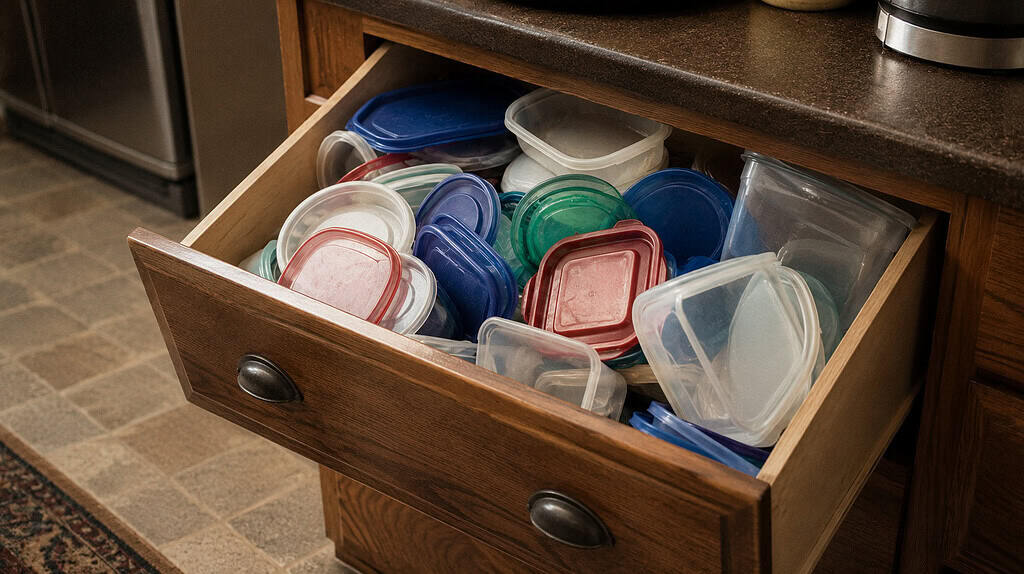
I have a kitchen drawer that won’t close.
It’s full of plastic containers. Tupperware, takeout containers from restaurants, the Cool Whip tubs my mother taught me to wash and save.
Half of them don’t have lids.
The lids are in another drawer, with no containers to match.
(They breed in the night. I’m sure of it.)
I keep them all because what if I need to send leftovers home with someone? What if I make a casserole for a sick friend?
When I count honestly, I reach for four. The rest is “just in case.”
A drawer that holds twenty containers and four lids isn’t preparedness. It’s a bottleneck every time you try to pack a lunch.
If you haven’t used a container in the last six months, the “case” you were saving it for has come and gone.
2. Old Electronics and the Cord Drawer
We all have a drawer.
You know the one.
The one with old cell phone chargers, a tangle of cords no one can identify, and the camera you used in 2008.
I cleaned mine out last year and counted twenty-two different cords.
I could match four of them to anything I currently own.
The “just in case” logic here is especially sticky. What if I need this exact cord?
But when something actually breaks, we don’t go digging through the cord drawer.
We give up and replace it through whatever’s at hand.
Take a long look. The cord drawer is a graveyard, not a workshop.
You can recycle most old electronics at Best Buy or your local hardware store, with no fee.
3. Expired Medications and Half-Used Toiletries
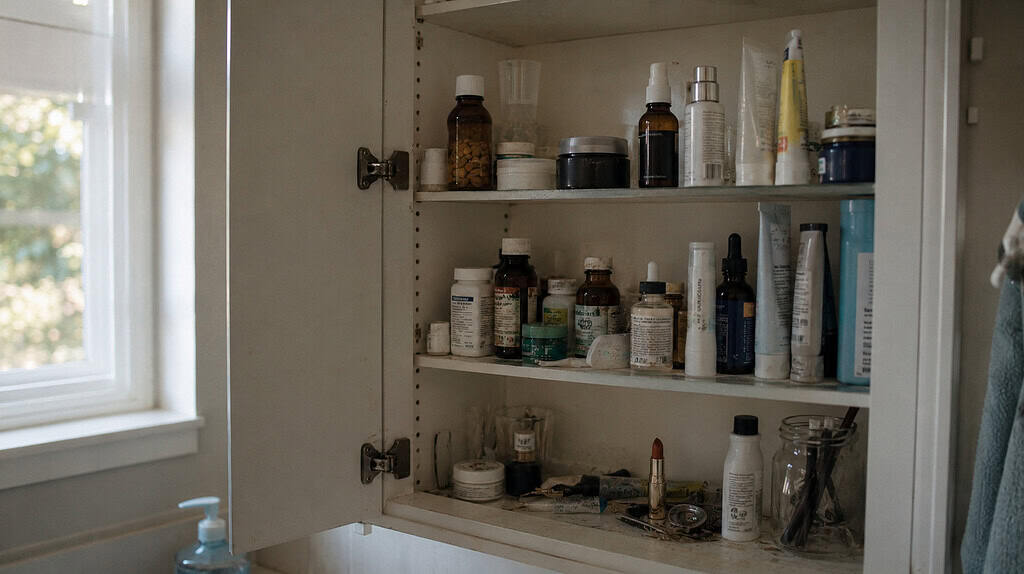
The bathroom cabinet is its own special category.
The cough syrup from 2019.
The half-used antibiotics you didn’t finish ten years ago.
(Don’t take those, please.)
The lipstick from a wedding you went to before your kids were married.
These aren’t “just in case” items in the same sense as cords or jars.
They’re items we never quite finished and never threw out.
The same principle is at work. What if I need it?
With most expired medication, you couldn’t safely use it anyway.
And with cosmetics, anything older than a year or two has long since changed in ways that make it not worth keeping.
Most pharmacies will take expired medications back at no cost. Many cities have take-back days.
4. The Hardware Jar in the Garage
There’s a glass jar in my garage that’s been there since we moved in.
It holds screws, nails, washers, the little pieces that come in furniture boxes that you save in case you ever need them.
I haven’t reached into that jar in seven years.
Not once.
But every time I think about emptying it, I picture some hypothetical moment in the future where my husband says “honey, do we have a quarter-inch wood screw?” and I’d be a hero.
That moment doesn’t come.
When something needs to be fixed, we either go to the hardware store or call someone who has the right tool.
The jar is a museum of decisions other people made about other furniture in other homes.
It can go.
5. The “Office” Drawer of Pens and Sticky Notes
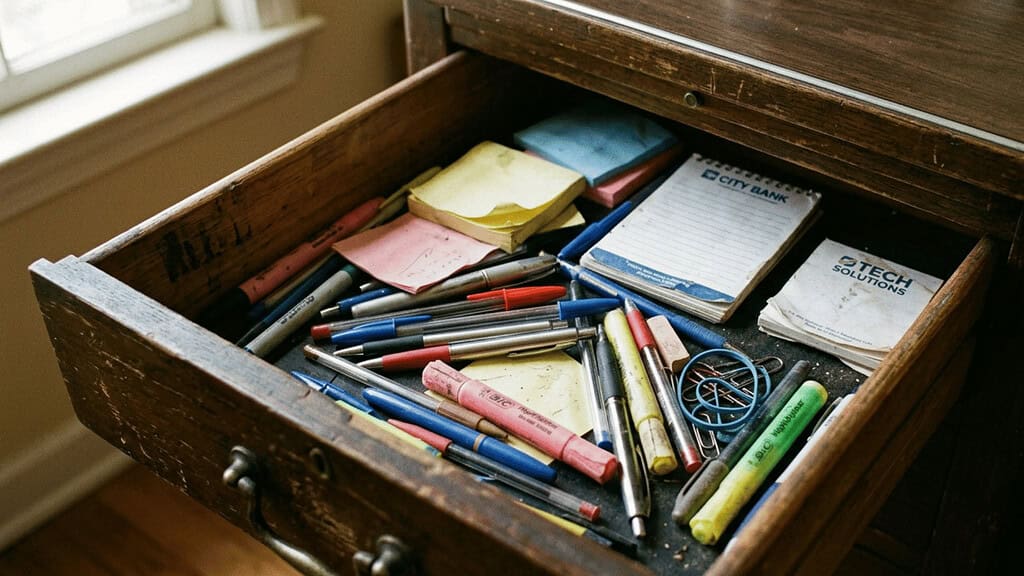
Pens that don’t write.
Sticky notes from a bank that closed.
The little brown calendar your dental office sent in 2017.
Office supplies multiply almost as fast as mugs do.
The “just in case” voice tells us I might need to write something down.
But you have one pen by the phone, one in your purse, and probably one in the kitchen junk drawer.
That’s all you actually use.
The rest is decoration in a drawer.
Test every pen. Throw out the ones that don’t write. Keep five.
You will not run out.
6. Cleaning Supplies Under the Sink
I wrote about this recently when I talked about the things I stopped buying.
Cleaning supplies deserve their own mention here, because the “just in case” version is different from the “stopped buying” version.
Stopped buying means you’ve stopped adding to the pile.
“Just in case” is about what you’ve been keeping even though it doesn’t work.
The mildew remover from three apartments ago.
The grout cleaner you bought for one bathroom you don’t have anymore.
The wood polish for furniture you sold.
These items don’t fit your current home.
They were “just in case” items for a version of your life you no longer live.
Empty the bottles into a hazardous waste collection (most cities have them) and let go of the rest.
7. The Linen Closet Backups
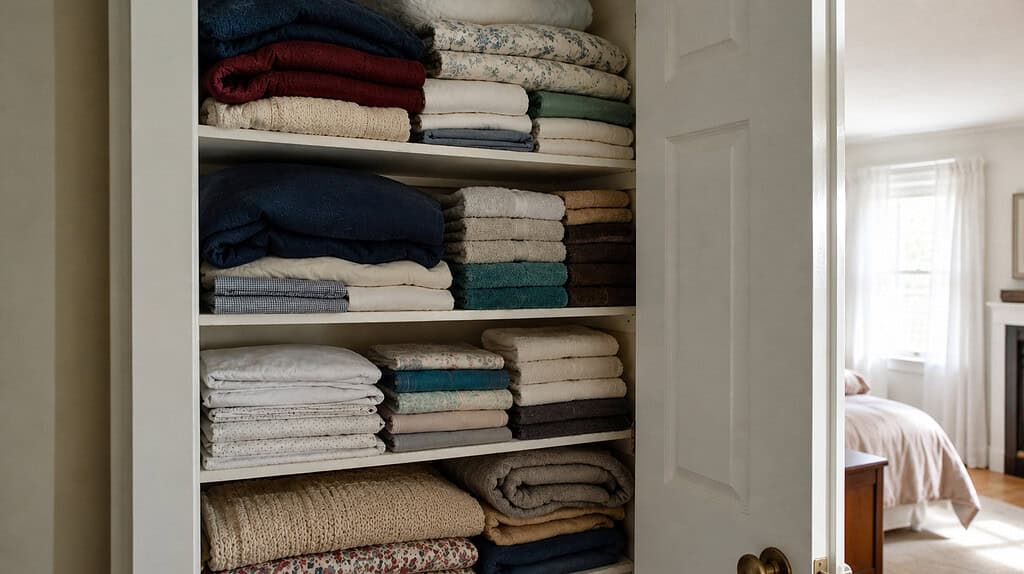
Sheets for beds you no longer have.
Towels saved for guests who haven’t visited in eight years.
A stack of beach towels for grandkids who are now teenagers and don’t want them.
The endowment effect’s cousin lives here.
(I dug into this in the post on the endowment effect if you want the deeper psychology.)
The linen closet is a place where “just in case” thinking masquerades as being a good host.
But when guests actually come, they rarely reach for the special towels.
When the kids visit, they bring their own.
When you have a flu, you grab the same blanket you always use.
Two sets of sheets per bed in your house. Enough towels for the people who actually live there. Plus maybe one set for the most-frequent overnight guest.
Anything more is the closet imagining a life you’re not living.
8. Clothes That Don’t Fit (For “When I Lose the Weight”)
This one’s the most tender.
Most of us have a section in the closet of clothes that don’t fit anymore.
Clothes you wore at a different age. A different season of life. A different body.
You keep them because someday you’ll lose the weight and you’ll be glad you did.
I’m not going to tell you whether or not you’ll lose weight. That’s your business.
The clothes themselves are a different question.
Even if you do return to a smaller size, those clothes are aging in your closet right now.
Styles change. Fabrics yellow. Elastic loses its stretch.
By the time you fit them again, you probably wouldn’t choose them anyway.
What I learned as I started letting go of clothes I’d held onto for years was that those clothes weren’t an investment.
They were a daily reminder of who I wasn’t.
If they don’t fit your body now, they’re not serving you. They’re judging you.
It’s okay to let them go.
9. Craft and Hobby Supplies You Never Started
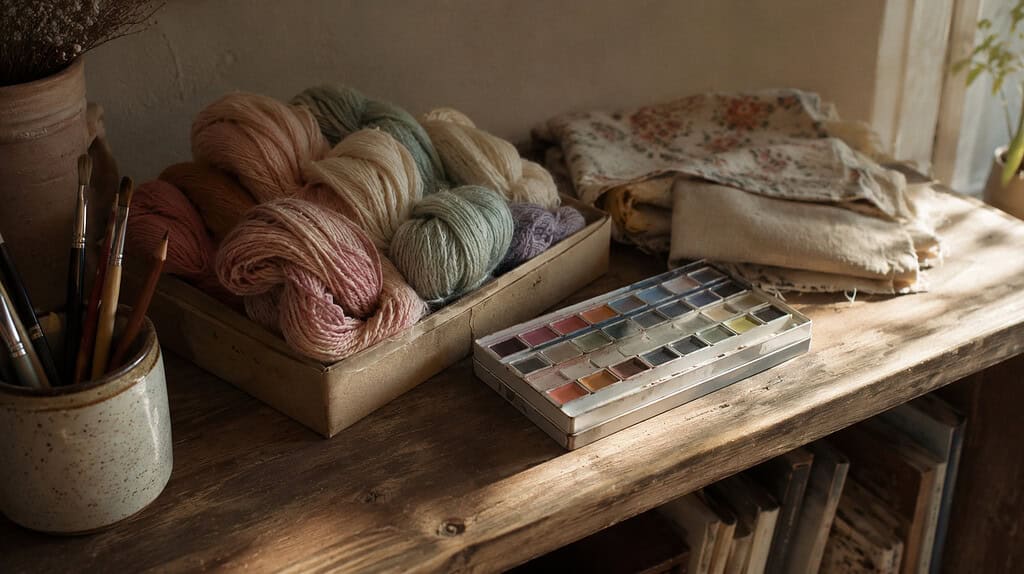
The yarn for the sweater you were going to knit your daughter.
The watercolors from when you decided you’d take up painting.
The boxes of fabric for the quilt you never made.
These are some of the saddest “just in case” items, because they aren’t really about needing.
They’re about the version of you who was going to start.
You bought them with hope.
Now they sit in a closet, reminding you of the project that never began.
But hobbies don’t happen because you stockpile for them.
They happen because you start them.
If the project hasn’t started in three years, the supplies aren’t waiting for you. They’re waiting for someone else.
A neighbor’s grandkid. A church group. A school art teacher.
Pass them along to someone who’ll actually start.
10. Manuals, Warranties, and “Important Papers”
The drawer of paperwork.
Manuals for appliances you sold in 2014.
Warranties that expired during the Bush administration. (Take your pick which Bush.)
Receipts from a gym you canceled.
We keep all of this because what if I need to look something up?
These days, almost any manual you’d need is online.
Almost any receipt over a year old is no longer needed for taxes.
Most warranties are findable in your email or the manufacturer’s website.
What’s safe to keep:
- Tax records for the last seven years
- Current insurance documents
- Current warranties
- Deeds and titles
- Birth and marriage certificates
- End-of-life documents
What’s safe to shred:
- Almost everything else
This was one of the harder ones for me.
But once I organized the paper clutter, I realized I’d been keeping a museum of bills, not a useful filing system.
How to Finally Let “Just in Case” Items Go
Here are the strategies that actually moved things out of my house.
None of them require you to imagine replacing the item later.
They start with what’s true right now.
The “Have I Used It in a Year” Test.
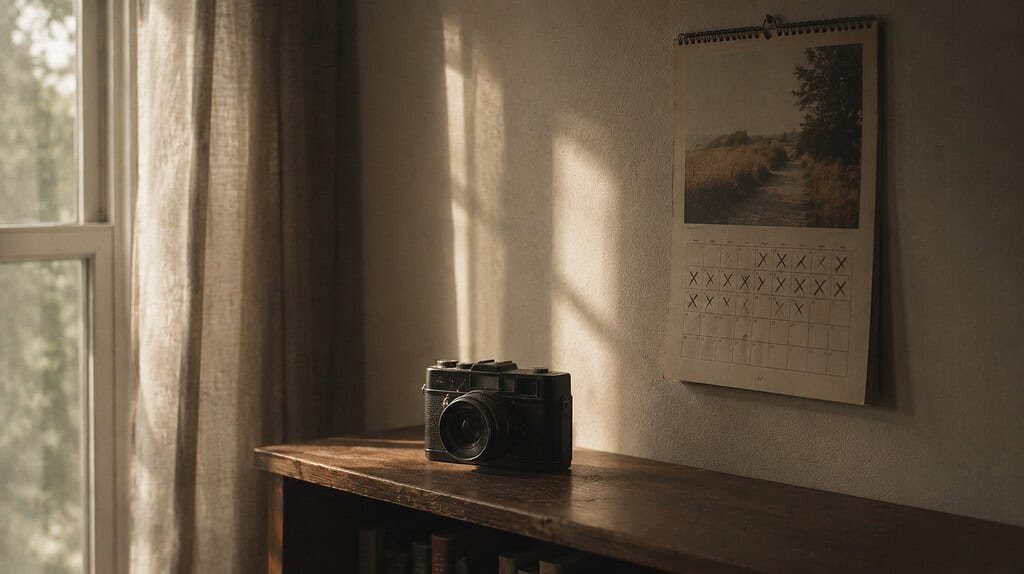
If the item has been sitting untouched for a full year, you’ve already PROVEN you can live without it.
The “case” hasn’t come.
The Trial Donation Box.
Put items in a box. Tape it shut. Then, put it in the garage or a closet for thirty days.
If you didn’t reach for anything in that month, donate the whole box without opening it.
The pain you feared probably won’t show up.
Find Someone Who Needs It Now.
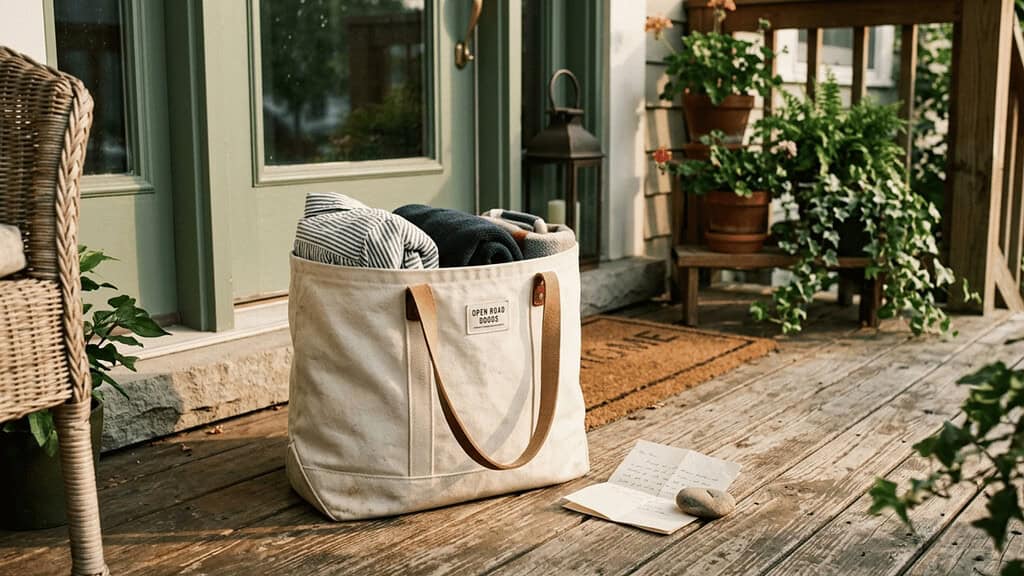
“Just in case” items often hold someone else’s “right now” need.
The yarn you didn’t use can become a sweater for a granddaughter or a community knitting group.
The hardware can go to a Buy Nothing group.
(I wrote about meaningful places to send your belongings if you want a list.)
Photograph Before You Let Go.
This works for paperwork, manuals, and sentimental items. The photo holds the information.
The drawer gets the space.
Name the Cost You’re Already Paying.
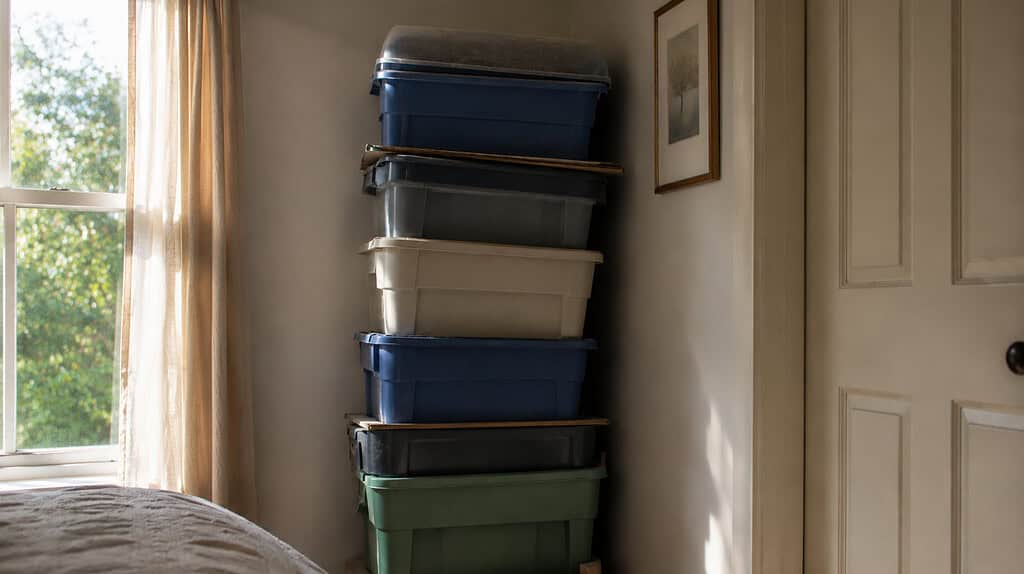
The space the item is taking up. The drawer that won’t close because of it. The mental weight of seeing it.
Just in case items aren’t free. You’re paying for them in storage and attention every single day.
Keep One, Not Twenty.
You don’t have to part with every empty jar. Keep two or three. You don’t have to throw out every cord. Keep the ones that match the things you currently own.
The endowment effect makes us think we need an entire collection. We don’t.
You don’t have to take on every single “just in case” item at once.
Pick one drawer. Empty it. Then observe what happens.
The “case” you were saving for almost certainly won’t come.
And if it ever does, you’ll figure it out the way humans always have.
The Lighter Home You Make When You Stop Saving Things for Someday
Once I started letting go of “just in case” stuff, my house changed in ways I didn’t expect.
The kitchen drawer closes now.
I can find a pen that writes.
The garage shelf isn’t sagging.
The bathroom cabinet has space in it.
Those are the small wins.
The bigger one is harder to describe.
I stopped feeling watched by my own stuff.
You know the feeling, even if you’ve never named it.
The drawer you avoid opening because you know what’s in there.
The closet shelf you don’t look at directly.
The corner of the basement you walk past without seeing.
That’s “just in case” clutter watching you back.
When you let it go, your house gets quieter.
Not literally. But in your head.
You stop walking past piles you’ve memorized.
You stop apologizing to yourself for not dealing with them.
You stop running the loop in the back of your mind that says I should really get to that someday.
Building decluttering habits over time taught me something that surprised me.
The lighter home isn’t really about the stuff.
It’s about how the stuff was making you feel about yourself.
Once the “just in case” pile is gone, you’re not living in a house that’s full of failed promises and unmet expectations.
You’re living in a house that’s just yours, as you are right now.
That’s the lighter home.
And it’s been waiting for you the whole time.
A Gentle Place to Begin Letting Go

If “just in case” clutter has been hiding in every corner of your home, the hardest part isn’t the letting go.
It’s knowing where to start.
That’s why I put together a free resource that walks you through your home, room by room, with gentle prompts to help you actually see what’s there.
My free Declutter for Self Care Checklist isn’t about getting rid of everything overnight.
It’s about taking one small honest look at one small space at a time.
It’s the kind of guide I wish I’d had years ago.
Practical, soft, and made for women who want a calmer home without overhauling their whole life to get one.
Frequently Asked Questions
What is “just in case” clutter?
“Just in case” clutter is the stuff we keep around because we might need it someday, even when we haven’t reached for it in months or years.
It hides in drawers, garages, basements, and bathroom cabinets.
The empty jars, the spare cords, the half-used cleaning products, the manuals for appliances we no longer own.
Each item earns its place by promising to be useful later. That “later” almost never arrives.
Why do I keep things “just in case” even when I don’t need them?
Because your brain is wired for loss aversion.
The possible future loss of needing something and not having it feels bigger than the actual daily cost of keeping it.
So your mind chooses the safer-feeling option, which is to hold on.
It’s also generational. Many of us inherited “just in case” thinking from parents or grandparents who lived through real shortages.
That habit doesn’t always die when the shortages do.
How do I let go of “just in case” items without regret?
Start with the time-based truth: if you haven’t used it in a year, you’ve already proven you can live without it.
The trial donation box helps. Put items in a box, seal it, leave it for 30 days. If you didn’t reach for anything, donate the box without opening it.
Photographing items before letting go works well for paperwork, manuals, and sentimental things. The photo holds the information. The drawer gets the space.
What’s the difference between “just in case” clutter and being prepared?
Being prepared means having what you actually use, in the amount you actually use it.
“Just in case” clutter is what you keep on top of that, in case some imagined future situation calls for it.
A first-aid kit you check yearly is preparedness.
Forty empty jars stacked in a basement because someday you might can tomatoes is “just in case.”
The difference is whether the item is part of your real life or a hypothetical version of it.
How do I know if I’m a “just in case” person?
A few signs:
- You have drawers, closets, or shelves you avoid opening
- You can name several items in your home you haven’t used in over a year
- You feel guilt when you imagine throwing something “still good” away
- You hear your mother’s voice when you try to let something go
If any of those sound familiar, you’re not alone.
Almost every woman I know who grew up in an American home in the second half of the twentieth century has at least some “just in case” thinking running in the background.
Naming it is the first step to setting some of it down.
Follow me elsewhere!

