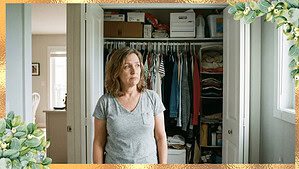
A few springs ago, my friend Karen came over for coffee. She's the kind of person who says exactly what she thinks (she always has been), and I love that about her. Most of the time.
We were sitting at the kitchen table when she asked if she could grab a glass from the cabinet. I said sure. And then I watched her open the door and just stand there.
“Alison,” she said, “how many glasses do you actually need?”
I laughed it off. But after she left, I opened that cabinet again and counted. Thirty-four drinking glasses. For a household of two.
That night I couldn't stop thinking about it. So I started looking around.
Really looking.
Not the quick glance you do when company's coming, but the kind where you open every drawer and closet and just sit with what you see.
The spare bedroom had become a storage room sometime in the last five years (I couldn't pinpoint exactly when). The hall closet hadn't fully closed in months. My garage had boxes along the back wall that I'd moved from our old house and never opened.
None of it looked like what you see on those TV shows. My home was clean. Everything was behind closed doors. But behind those doors, things had been quietly piling up for years.
That's when the thought first crossed my mind.
Am I a hoarder?
It felt like a dramatic thing to even think. But the more I sat with it, the more I realized it was worth asking. Not to scare myself, but to understand why I was holding onto so much and what it was really costing me.
Disclosure: A quick note before we go further. This post is based on my own experience and personal observations. I am not a doctor or therapist. If you're struggling with hoarding in a way that's affecting your daily life, your safety, or your relationships, please reach out to your doctor or a mental health professional. There is real help available, and asking for it is nothing to be ashamed of.
It Doesn't Look Like What You See on TV
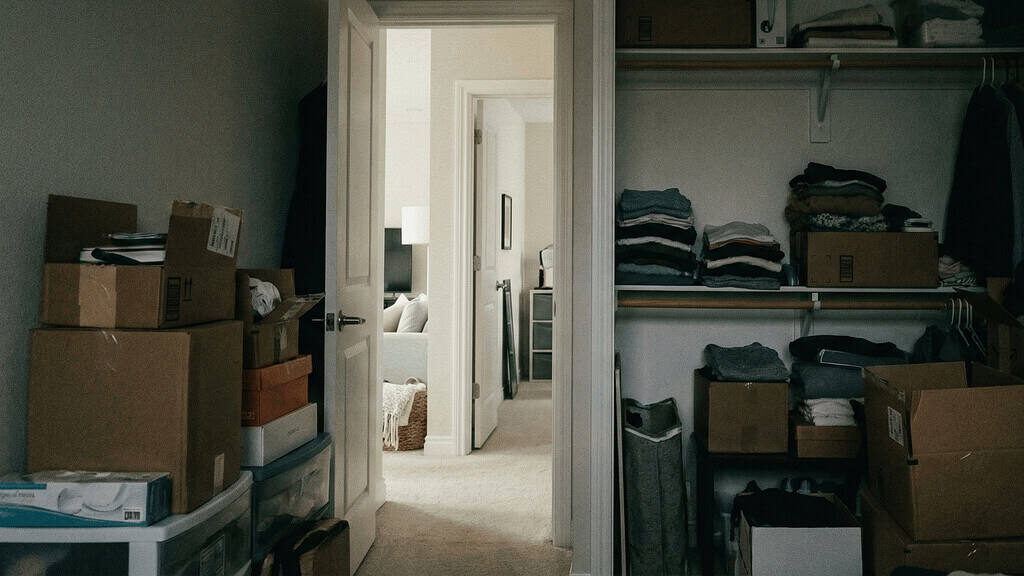
When most people hear the word “hoarder,” they picture the same thing.
Stacks of newspapers reaching the ceiling. Pathways carved through rooms. Health inspectors at the door. That's the version we've all seen on television, and it's real.
But it's also the extreme end of something that exists on a much wider spectrum.
The version that most women my age deal with looks nothing like that.
It looks like a clean kitchen with cabinets you're afraid to reorganize because you don't know where to start. It looks like a guest room that hasn't had a guest in years because there's no room for one. It looks like a garage full of boxes from a move that happened a decade ago.
From the outside, everything seems fine. The house is presentable. You're not living in filth. You'd never end up on a TV show.
But behind the surface, there's a heaviness you can feel every time you open a closet or walk into a room you've been avoiding.
And you might not call it hoarding because it doesn't match the picture in your head.
That's the tricky part.
Hoarding doesn't always announce itself. Sometimes it just quietly builds, one “I'll deal with it later” at a time, until the later never comes and the stuff just stays.
I spent years not seeing it in my own home because I was comparing myself to the worst-case version.
But once I stopped doing that and started looking at my own patterns honestly, the picture got a lot clearer.
The Patterns I Didn't Recognize Until Someone Pointed Them Out
After Karen's comment about the glasses, I started paying closer attention to my own habits. Not in a harsh, self-critical way, but with honest curiosity.
And I noticed patterns I'd been brushing off for years.
If any of these feel familiar, I'm not here to diagnose you.
I'm just sharing what I saw in myself once I finally slowed down enough to look.
You Keep Things “Just in Case”
This one was everywhere in my house.
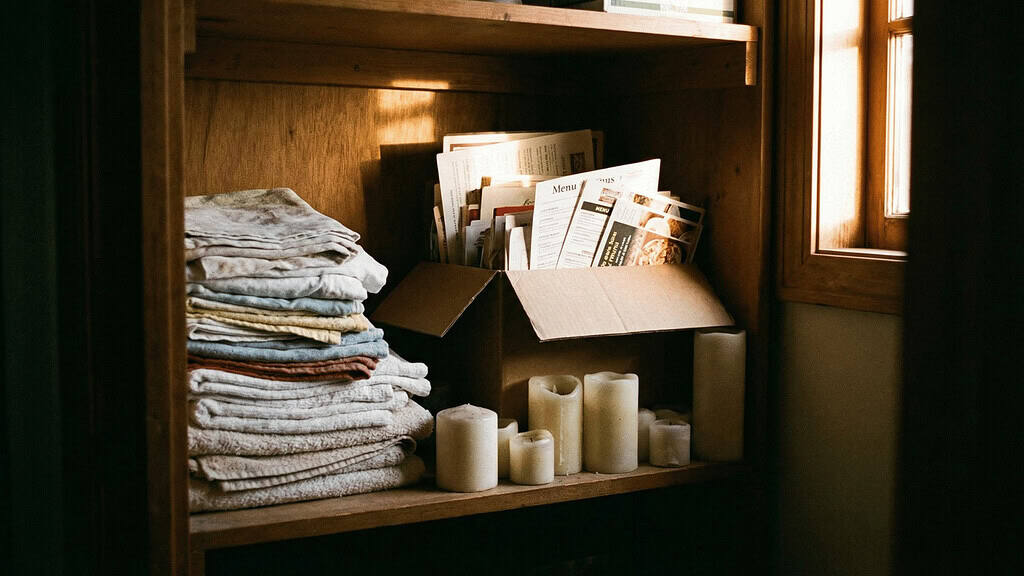
Extra sets of sheets for beds I don't own anymore. A drawer full of takeout menus I'll never use because I look everything up on my phone now. A cabinet stocked with enough candles to survive a three-week blackout.
Every single item had the same logic behind it. “What if I need it someday?”
The problem was, someday never actually came. And the pile just kept getting bigger.
You Buy Duplicates of Things You Already Own
I found three identical bottles of the same cleaning spray under my kitchen sink. Not because I was stocking up on purpose, but because I forgot I already had them.
When your home is full enough that you lose track of what you have, you end up buying replacements for things that were never actually gone.
There Are Rooms or Closets You Avoid
My spare bedroom door stayed closed for months at a time.
Not because I didn't care about it, but because opening it meant facing a problem I didn't know how to solve.
If you have a space in your home that gives you a little knot in your stomach every time you walk past it, that's worth paying attention to.
You've Stopped Having People Over as Much
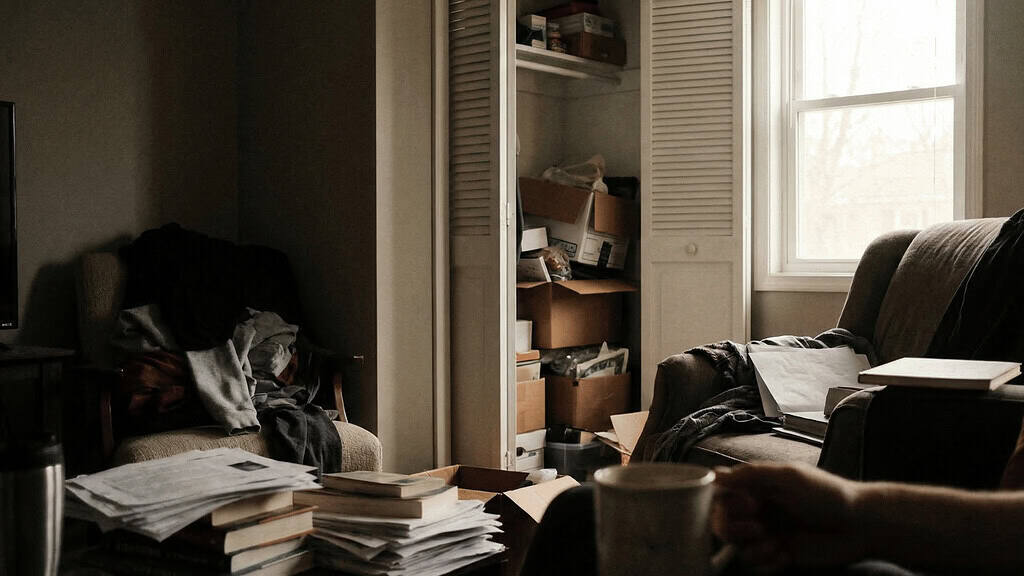
I didn't make a conscious decision to stop inviting friends in. It just sort of happened.
I'd suggest meeting at a restaurant instead. Or I'd say the house was “in the middle of a project.”
The truth was I didn't want anyone to see the closets, the spare room, or the stacks I'd been meaning to sort through for months.
Letting Go of Something Feels Like Losing Part of Yourself
This is the one that caught me the most off guard.
I wasn't holding onto things because I thought they were valuable. I was holding onto them because they felt like proof of something. Proof that I'd raised a family, hosted holidays, built a life.
Letting go of the physical stuff felt like letting go of the story.
And that scared me more than the clutter did.
You Move Things Instead of Making Decisions About Them
I couldn't tell you how many times I picked something up, looked at it, couldn't decide what to do with it, and just moved it to a different spot.
The kitchen counter to the dining table. The dining table to the spare room. The spare room to the garage.
It was motion without progress. And it kept the clutter circulating instead of leaving.
You Keep Broken Things You Swear You'll Fix
The lamp with the wobbly base. The picture frame with the cracked glass. The blender that only works on one speed.
I kept all of them because throwing away something “fixable” felt wasteful.
But I never fixed any of them. And deep down, I knew I wasn't going to.
The Reasons We Hold On Tighter as We Get Older
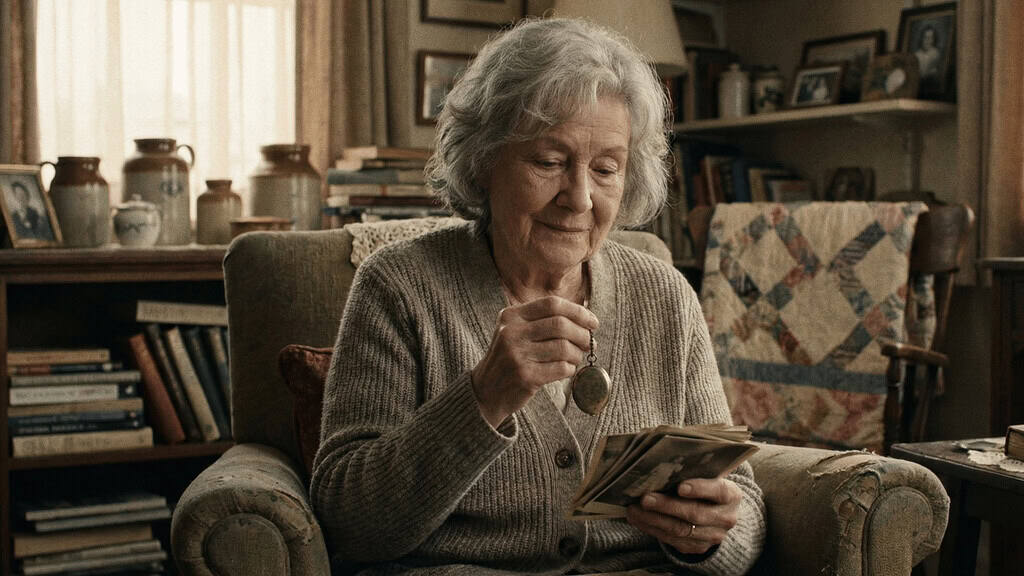
I don't think any of the patterns I just described happen because we're careless or lazy. If anything, they happen because we care too much.
Most women my age were raised by parents who didn't waste anything. My mother reused aluminum foil. She kept rubber bands in a kitchen drawer. She had a cabinet full of glass jars “just in case” she needed them for canning season, even years after she stopped canning.
That mindset gets passed down whether you realize it or not.
We grew up hearing “waste not, want not” so often that throwing away a perfectly good anything still feels like a small betrayal. Even when the thing hasn't been touched in years. Even when we can't remember why we kept it in the first place.
But it's not just about how we were raised.
Life changes have a way of making us grip tighter. The kids leave. A spouse passes. You retire and suddenly the house is quieter than it's ever been. The things around you start to feel like company.
Like evidence that your life was full and busy and mattered.
I noticed my own holding-on got worse after my kids moved out. The house felt too empty, and keeping their old things around made it feel less so.
I wasn't filling rooms with junk.
I was filling a gap I didn't know how to name.
Once I understood that, I stopped being so hard on myself about the clutter. And I started being more honest about what was really behind it.
The Difference Between Holding On and Holding Yourself Back
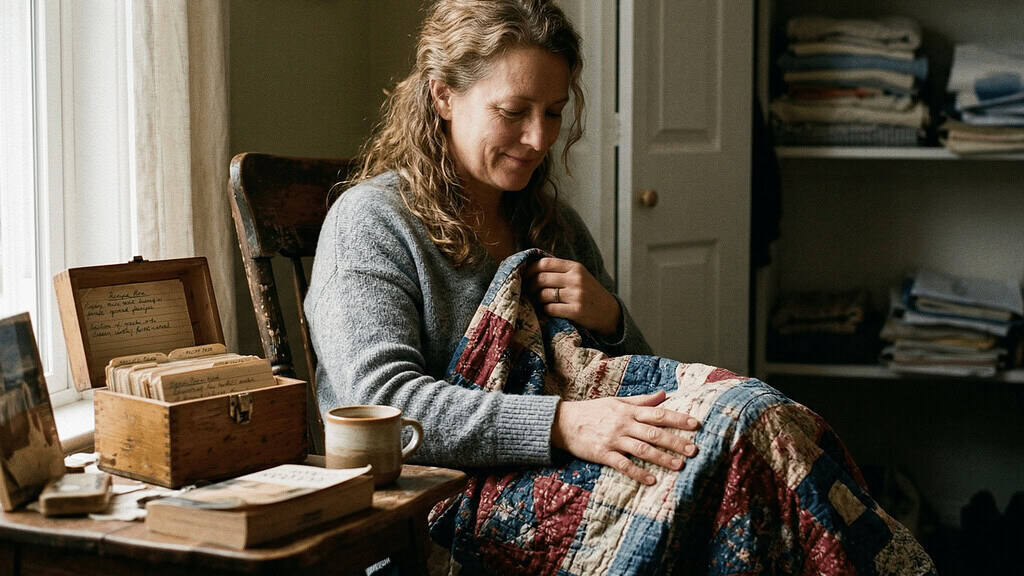
I want to be clear about something. Keeping things you love is not hoarding.
The quilt your grandmother made.
A handful of your kids' drawings from elementary school.
The recipe box your mother used every Thanksgiving.
Those things carry real meaning, and there is absolutely nothing wrong with giving them a place in your home.
The question isn't how much you have.
It's how it makes you feel.
If you open a closet and feel a quiet sense of comfort because the things inside matter to you, that's holding on. If you open that same closet and feel a wave of guilt, anxiety, or dread because you don't know what to do with any of it, that's something different.
I know the difference because I've felt both.
My mother's recipe box sits on my kitchen counter and I smile every time I see it. But the three bins of old holiday decorations in my garage that I haven't opened since 2017?
Those didn't make me smile. They made me feel stuck.
And every time I thought about dealing with them, I felt tired before I even started.
That's the line for me. Not the number of things, but the weight they carry.
If your stuff gives you peace, keep it. If it's quietly draining your energy every time you walk past it, it might be time to ask yourself why you're really holding onto it.
That one honest answer can change everything.
What to Do If You Saw Yourself in This Post
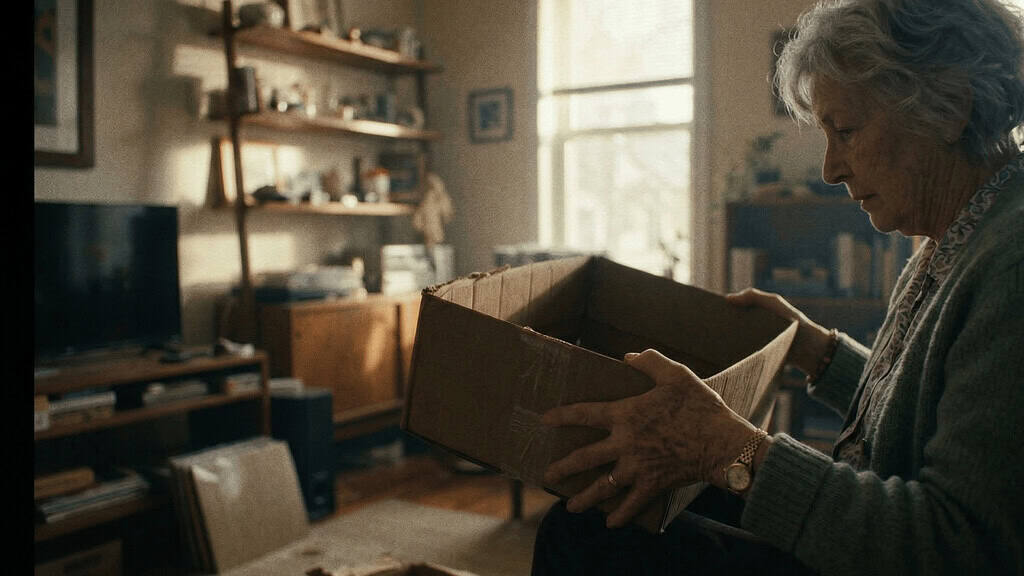
If you read through those signs and felt a little uncomfortable, that's actually a good thing.
It means you're paying attention.
And paying attention is where every kind of change starts.
You don't need to overhaul your entire home this weekend. You don't need to call a therapist or label yourself anything. You just need one small next step.
Here are a few that worked for me.
Pick One Small Space and Start There
Not a whole room. Not the garage. Just one drawer, one shelf, or one corner of a closet.
The goal isn't to finish. It's to prove to yourself that you can make a decision about what stays and what goes without the world falling apart.
I started with my kitchen drawer. It took twenty minutes. And when I closed it and it actually shut all the way, I felt something shift. It was small, but it was real.
Ask Yourself the Hard Question
Margareta Magnusson's question from her book on Swedish death cleaning has become my go-to filter. “Will anyone be happier if I save this?”
If the answer is no, and you're only keeping it out of guilt or habit, that tells you something worth listening to.
Talk to Someone You Trust
Not for permission. Not for help sorting boxes. Just to say it out loud.
When I told my friend Karen what I'd been noticing about my own habits, she didn't judge me. She said, “I've been doing the same thing with my basement for years.”
That one conversation made me feel less alone with it. And less alone makes everything easier.
Give Yourself Permission to Go Slow
This isn't a race. There's no deadline. If you sort through one drawer today and don't touch anything else for a week, that still counts.
The women who try to do it all in one weekend are the ones who burn out and stop. The ones who go slow are the ones who actually finish.
Know When It Might Be Bigger Than a Closet
If the thought of letting go of anything sends you into a genuine panic, or if clutter has started affecting your safety, your sleep, or your relationships, it might be worth talking to a professional.
That's not a failure.
It's one of the bravest things a person can do. And there are people trained specifically to help with this, gently and without judgment.
This Isn't a Label. It's an Invitation to Look Closer
I didn't write this post to make anyone feel bad about their home or their habits. I wrote it because I spent years not seeing my own patterns, and I wish someone had gently pointed me in the right direction sooner.
Asking “am I a hoarder?” doesn't mean the answer is yes. It just means you're willing to be honest with yourself.
And that kind of honesty is rare.
You don't need to empty your house. You don't need to change overnight. You just need to start noticing.
Notice which rooms make you feel calm and which ones make you tense.
Notice whether you're keeping things because you love them or because letting go feels too hard.
Notice whether your stuff is serving you or quietly weighing you down.
That's all this is. A chance to look a little closer and decide what you want to do with what you find.
Whatever you decide, you're not alone in this.
Not even close.
Not Sure Where to Start? Let Me Help.

If this post has you looking around your home a little differently, you don't have to figure out the next step alone.
My free Declutter for Self Care Checklist gives you a clear, low-pressure way to start working through your space without the overwhelm that usually stops people before they even begin.
Frequently Asked Questions
How do I know if I'm a hoarder or just messy?
The biggest difference is how it makes you feel. A messy person might have clutter but can sort through it when they need to without much stress. If the thought of getting rid of things causes real anxiety, or if clutter has taken over spaces in your home to the point where you can't use them the way they were meant to be used, that's a sign it may be more than just a mess.
Is hoarding hereditary?
Research suggests it can run in families. That doesn't mean you're guaranteed to develop hoarding tendencies if a parent or grandparent had them, but it does mean the patterns can be passed down, whether through genetics or simply by growing up in a home where nothing was ever thrown away.
What causes hoarding to get worse with age?
Several things can contribute. Major life changes like retirement, losing a spouse, or kids leaving home can make people hold on tighter to the things around them. The scarcity mindset many of us inherited from our parents also plays a role. And after decades of accumulating, the sheer volume of stuff can feel too overwhelming to even start sorting through.
Can you be a hoarder and still have a clean house?
Yes. This is more common than most people realize. Some people keep their main living areas tidy but have closets, spare rooms, garages, or storage units packed full of things they can't bring themselves to let go of. The mess is hidden, but the weight of it is still there.
What should I do if I think I might be a hoarder?
Start small and be gentle with yourself. Pick one space and work through it at your own pace. Talk to someone you trust about what you're noticing. And if the problem feels bigger than you can handle on your own, reach out to your doctor or a therapist who specializes in hoarding. There's no shame in getting support.
Follow me elsewhere!

