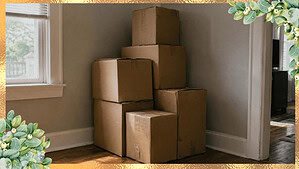
Last spring I went looking for my winter boots in the basement and couldn't find them. Not because they were lost, but because I had to move four boxes that weren't mine to get to the shelf where they should have been.
One box was my daughter's college papers. One was my son's old hockey gear. One belonged to my sister, from when she moved and “just needed a spot for it, temporarily.”
That was six years ago.
I stood there in the cold basement and had a strange thought. When did this become the place where everyone keeps the things they don't want to deal with?
Somewhere along the way, without ever agreeing to it, I had become the keeper. The family storage unit. The one who holds onto everything so nobody else has to.
Maybe you know exactly what I mean. You open a closet, a drawer, a corner of the garage, and half of what's in there belongs to someone else. Your grown children. A parent who's gone now. A friend who meant to come back for it.
Here's the part that surprised me most. Decluttering other people's stuff is harder than decluttering your own, because it comes wrapped in guilt. It feels selfish to hand it back. It feels cold to let it go.
But holding all of it has a cost, and you're the one paying it. So before we talk about what to do, let's name what's actually happening. These are the signs I didn't see until my whole house was full of them.
The Signs I Didn't Notice Until My House Was Full of Them
None of this happens all at once. Nobody sets out to become the family storage unit. It builds slowly, one favor and one guilty yes at a time, until you look around and realize how much of your home is holding things that were never really yours.
See how many of these feel familiar.
1. You're Storing Things “Just Until They Figure Out What to Do With Them”
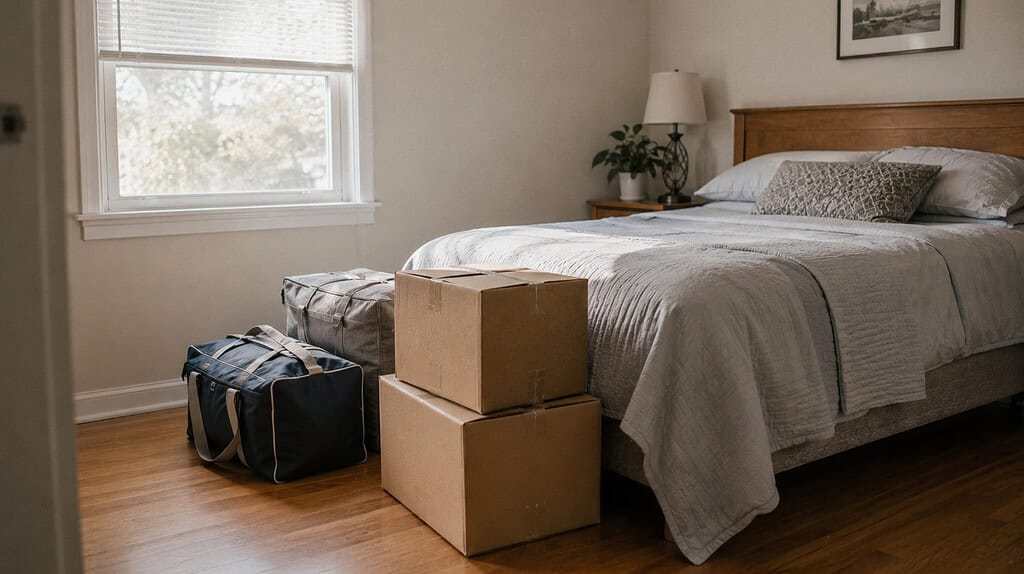
This is how it almost always starts. Someone you love is in a tight spot. They're moving, or downsizing, or between places, and they need somewhere to put their things for a little while.
And you have the room. Or at least you can make the room.
So you say yes, because that's what you do for the people you love. You tell yourself it's temporary. A few weeks, maybe a couple of months, and then they'll come get it.
But temporary has a way of becoming permanent when nobody's in a hurry.
The weeks turn into months. The months turn into years. And that “little while” is still sitting in your spare room, right where they left it.
The hard part is that the arrangement never really gets discussed again. You don't want to nag. They don't think about it, because it's out of their house and off their mind.
(Out of sight really is out of mind, just not for you.)
So the boxes stay. And every time you walk past them, some small part of you does the remembering that they've been able to set down.
2. Your Grown Kids' Old Rooms Are Still Full of Their Things

Your children moved out years ago. They have their own homes now, their own closets, their own garages. But their childhood bedrooms in your house look almost the same as the day they left.
The trophies are still on the shelf. The yearbooks are still in the drawer. There's a closet packed with clothes nobody has worn since the nineties.
You've asked them to go through it. They say they will, next time they visit. Then they visit, and somehow the weekend fills up with meals and grandkids and catching up, and the boxes never get touched.
So you leave it, because it's easier than pushing. If it helps, you're not the only one to learn that our kids often don't want the things we save for them.
And a room you could use for something you'd love, a craft space, a guest room, a quiet corner to read, stays frozen in a time that's already passed.
(I kept a room like that longer than I'd like to admit.)
3. You Feel Guilty Even Thinking About Giving Something Back
Here's a strange one. It's their stuff. You'd think handing it back would be simple. But the moment you imagine actually doing it, the guilt shows up.
You worry they'll feel pushed out. You worry they'll think you don't want their things, or worse, that you don't want them. You picture the little flash of hurt on their face and you decide it isn't worth it.
So you say nothing. You keep the box. You choose your own quiet resentment over their possible disappointment, every single time.
That guilt is worth paying attention to. It's the thing that turned you into the keeper in the first place, and it's the thing that keeps you there. Giving something back to the person it belongs to is not unkind. It's just honest.
4. You've Inherited More Than You Ever Agreed To
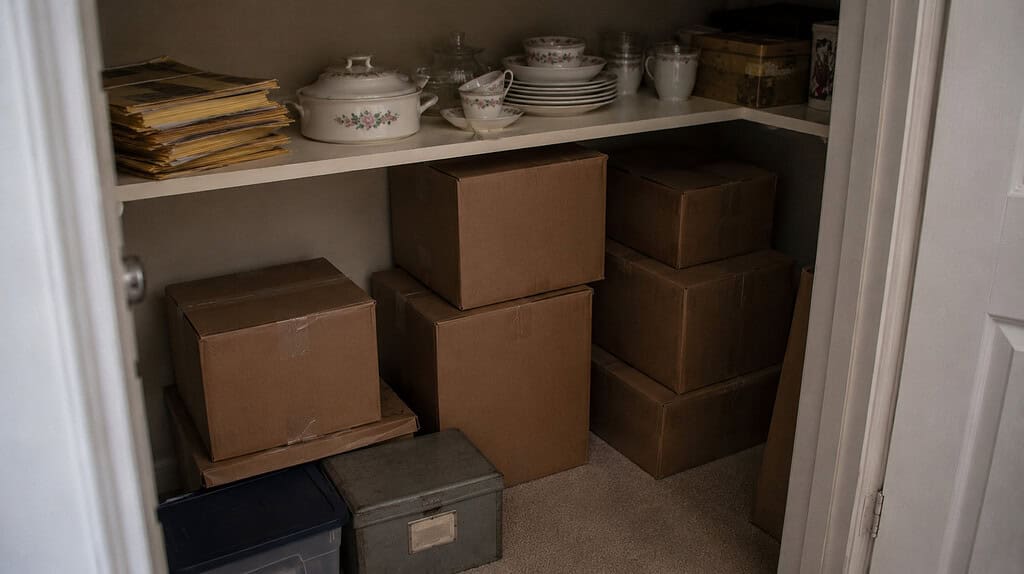
When someone passes, their things have to go somewhere. And so often, they come to you.
Maybe you were the one with space. Maybe you were the one who couldn't bear to see it all get scattered or tossed. So you took your mother's china, your father's tools, boxes of photos and letters and odds and ends, and you promised yourself you'd sort through it when you were ready.
That was a while ago. You're still not ready. The boxes sit in the basement or the back closet, and just knowing they're there sits on you too.
This is the heaviest kind, because it isn't only stuff.
It's grief in cardboard.
If the boxes came from a parent who's gone, you may recognize the quiet weight of decluttering after a death. Letting any of it go can feel like letting go of the person, and that's a real and tender thing. I've written before about how to let go of sentimental items when the guilt feels too heavy to move through alone.
But keeping all of it, untouched, isn't honoring them either. It's just a weight you carry alone.
5. You Know Whose Box Is Whose, but Nobody Ever Comes to Get Them
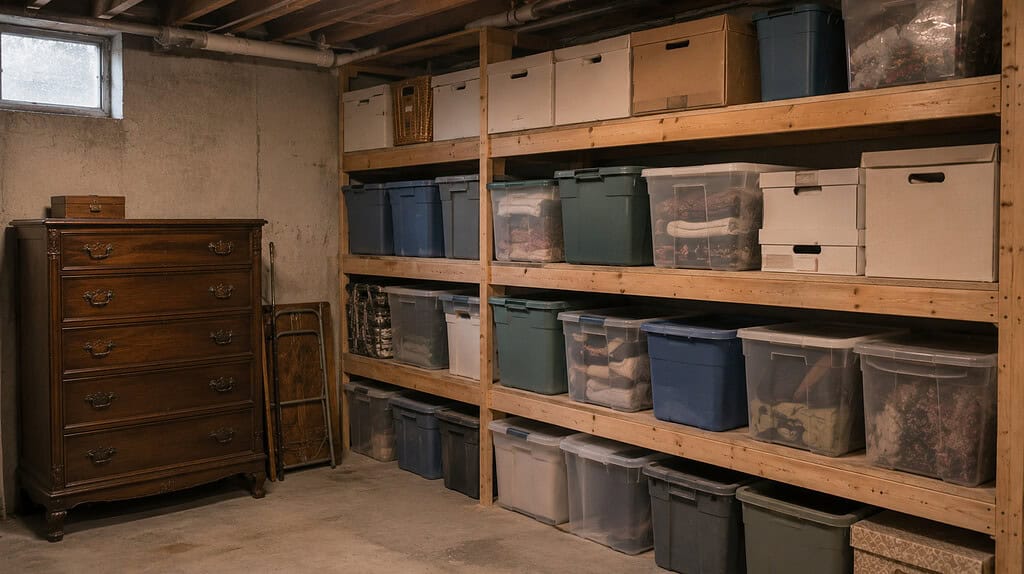
Walk into your storage space and you could give a tour. That stack is your son's. Those bins are your daughter's. That old dresser belongs to a friend who swore she'd pick it up.
Some of it may even be sitting in a basement that could be so much more than a holding pen for other people's things.
You've kept perfect track. You know exactly what's in there and who it belongs to.
But here's what that really tells you.
You're managing an inventory for people who aren't thinking about it at all. They've moved on. You're the one still keeping the records.
If you're the only person who remembers a thing exists, and the only person it burdens, then in every way that matters, it has quietly become yours to deal with.
(That realization stung a little when it landed on me.)
6. You've Rearranged Your Own Life Around Things That Aren't Yours
This is the sign that costs the most, and it's the easiest to miss.
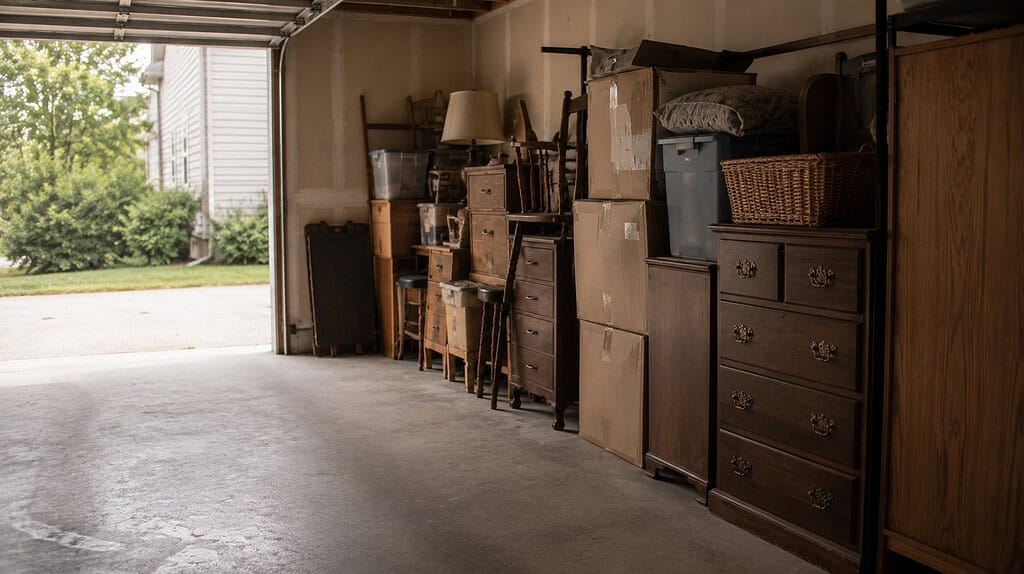
You can't park in the garage because it's full of someone else's furniture. You gave up the sewing room so it could hold your daughter's things. You squeeze your own belongings into half a closet because the other half is spoken for by stuff that isn't yours.
Little by little, your home has bent itself around other people's things. Your comfort came second. Your space came second. You came second.
And you probably didn't even notice it happening, because it happened one small compromise at a time. But add them all up, and you're living a smaller life inside your own house to make room for things the owners rarely think about.
7. You Keep Things Because You're Afraid of What They'll Think
Sometimes the thing keeping the clutter in place isn't the stuff at all.
It's the fear of a conversation.
You imagine telling your sister you can't store her boxes anymore, and you can already hear the sigh. You picture asking your kids to finally clear their rooms, and you brace for them to act put out. So you avoid the whole thing and keep holding what you're holding.
I understand that fear. Nobody wants to feel like the bad guy in their own family.
But think about what you're trading for that peace.
You're keeping your home cluttered to protect other people from a small, reasonable request. You're managing their feelings at the expense of your own space.
Fear of what other people will think is one of the uncomfortable reasons we hold onto clutter long after it stops serving us.
The people who love you can handle being asked. And the ones who get upset over a fair request are telling you something worth knowing.
8. You've Become the Family Memory-Keeper by Default, Not by Choice
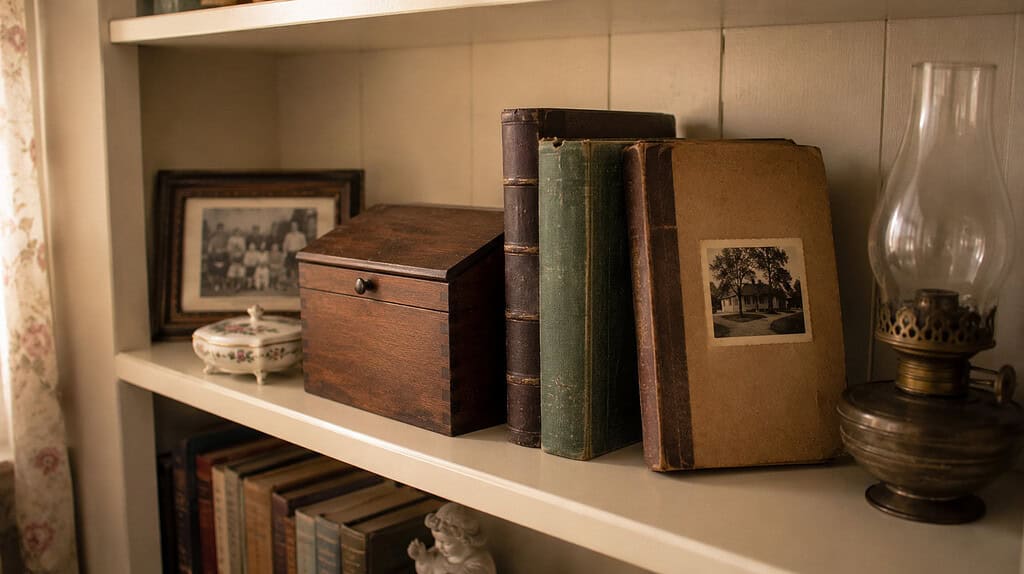
Every family seems to have one. The person who ends up holding all the history.
The photo albums, the heirlooms, the box of grandma's recipes, the things nobody wants to lose but nobody wants to house either. (I found real relief once I sorted out what to do with the old photos and portraits I'd been holding.)
Somehow that became you.
Not because you volunteered, but because you were the one who wouldn't let it get thrown away.
It's an honor, in a way. But it's also a job you never applied for. And it can start to feel less like keeping memories and more like running a small museum that only you maintain, dust, and worry about.
Being the keeper of the memories doesn't mean you have to be the keeper of every single object.
The two are not the same, even though it took me years to tell them apart.
9. You've Stopped Seeing the Clutter as Separate From You
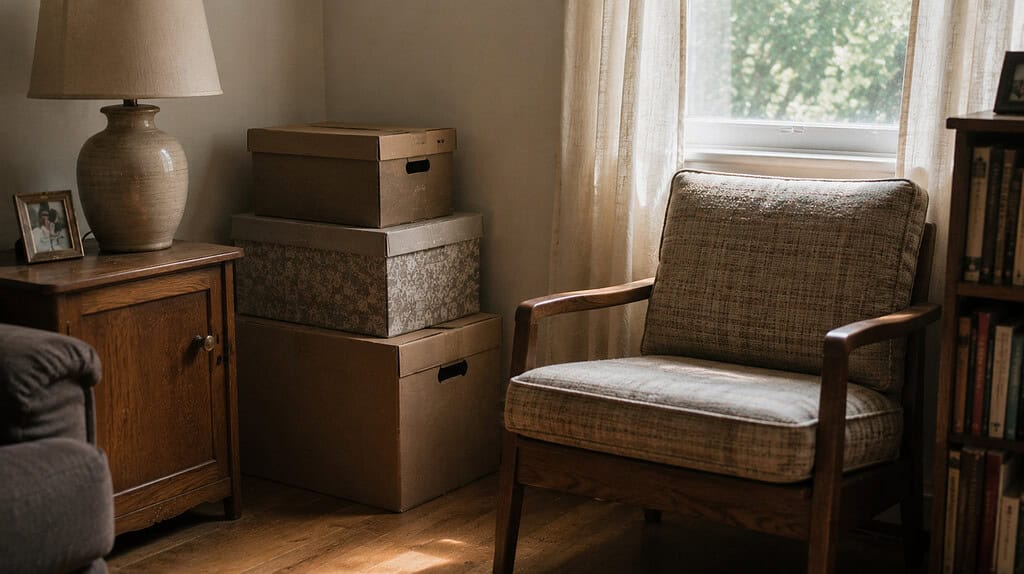
This is the one that creeps up quietest of all. In the beginning, you knew. That was her box, that was his gear, that was temporary. The lines were clear.
But after enough years, the lines blur. The boxes just become part of the house. Part of the background. Part of what you've come to expect when you open that door.
You stop seeing them as things that could leave. You stop imagining the space without them. They've been there so long they feel less like guests and more like walls.
And that's exactly when it's time to look again with fresh eyes. Because the moment you can see it as separate from you, you can start to picture handing it back. And once you can picture that, everything starts to change.
Giving Yourself Permission to Stop Being the Keeper
If you saw yourself in even a few of these, I want you to hear something gently.
You are allowed to stop.
You're allowed to hand the boxes back. You're allowed to give people a kind, clear deadline to come get their things. You're allowed to say, “I love you, and I need my space back,” and mean both halves of that sentence at once.
None of this makes you cold. Handing something back to its owner isn't rejecting them. It's just returning what was always theirs to carry.
Start small, the way you would with anything hard. Pick one person and one thing. Send the text. Make the call. “I'm clearing out the basement this month. Can we figure out a time for you to grab your boxes?” Kind, simple, and fair.
Some of it you'll hand back. Some of it, especially the things from people who are gone, you'll sort through slowly, keeping the few pieces that hold real meaning and letting the rest go with love. There's no rush and no wrong pace.
What matters is that you stop carrying all of it alone. Your home is meant to hold your life, not serve as the quiet storage unit for everyone else's. (You've earned the right to walk through your own basement and find your boots.)
You've kept everyone else's things safe for a long time. It's time to keep a little space safe for yourself.
Are You Ready to Reclaim Your Space?

If reading this stirred up that tired, weighed-down feeling, the one that comes from carrying more than you ever signed up for, I have something that might help.
It's my free Declutter for Self Care Checklist. I made it for exactly this kind of moment, when you know something has to change but the whole thing feels too big to face. It helps you start gently, with your own peace of mind at the center, instead of everyone else's stuff.
You've spent enough time holding space for other people. This is a soft place to start holding a little for yourself.
FAQ's
How do I ask someone to take back their belongings without hurting them?
Keep it warm and keep it clear. Let them know what you're doing (“I'm clearing out the spare room this month”) and invite them to be part of the plan (“can we set a time for you to pick up your things?”). You're not accusing anyone or picking a fight. You're sharing a decision and giving them a chance to help. Most people respond better than we fear, especially when the ask is kind and specific.
What should I do with a late parent's belongings I can't seem to let go of?
Go slowly, and give yourself permission to feel it. Start by keeping the few pieces that truly hold their memory, the ones you'd want to see or touch again. For the rest, remember that the love isn't stored in the object. You can pass things to family who'll use them, donate what's still good, and take a photo of anything you want to remember but don't need to house. There's no deadline on grief, so let it take the time it takes.
Is it wrong to give away things that were gifts or hand-me-downs?
No. Once something is given to you, it's yours, and that includes the freedom to let it go. A gift's job was to show love in the moment it was given. Keeping it forever out of guilt was never part of the deal. If an item doesn't fit your life anymore, you can thank it for the thought behind it and pass it on to someone who'll use it.
How do I stop becoming the family storage unit again?
Decide before you're asked. When the next request comes, it's okay to say you don't have the space, even if technically you do. You can offer to help someone find a real storage solution without volunteering your own home. Setting that boundary once makes it easier the next time, and the people who love you will adjust faster than you'd think.
Where do I even start when so much of it isn't mine?
Start with the easiest thing, not the heaviest. Pick one box with a clear owner who's easy to talk to, and handle just that one. A small, finished win gives you the proof that this is possible and the momentum to keep going. You don't have to solve the whole basement today. You just have to return one thing that was never yours to keep.
Follow me elsewhere!

