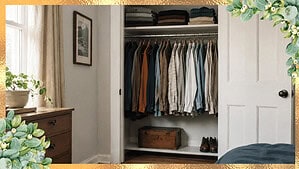
If you've ever stood in front of a closet and made a different kind of decision (not “do I love this?” but “is this still part of my life?”), you've already started doing Swedish death cleaning.
You just didn't know what it was called.
Most of us don't.
Margareta Magnusson didn't invent the impulse to lighten the load on the people we love. She just gave it a name.
Long before I'd ever heard the word, I'd already started doing pieces of it.
I sorted through a kitchen shelf one afternoon and caught myself asking, “would anyone actually be happy to find this?”
I gave a slow cooker straight to a neighbor instead of bagging it for donations, because I knew she'd cook with it.
I let go of clothes that didn't fit the life I was living anymore. Not because they were worn out, but because they belonged to a different version of me.
(I didn't know these were habits with a name.)
A few years ago, I read an article about Swedish death cleaning.
The article almost made me close it. The name sounded heavy.
But by the end, I wasn't reading about something foreign. I was reading about things I'd already been doing.
The relief was bigger than I expected.
Because if you've been doing this without realizing it, then you're not starting from zero. You're farther along than you think.
This post is a list of ten habits that show you're already doing Swedish death cleaning, even if you haven't named it that yet.
If any of them feel familiar, you're not behind.
You're already doing the work. You just didn't know what to call it.
What “Doing Swedish Death Cleaning” Actually Means

Most people think Swedish death cleaning is a project.
A weekend. A big push. A reset.
That's not what it is.
Swedish death cleaning is a set of habits. Small things you do, over and over, that shape what your home looks and feels like over years.
Margareta Magnusson, who wrote the book that put a name on this practice, said it took her years to work through her own home. Not days. Not months. Years.
Because death cleaning isn't really about clearing one space. It's about how you make a thousand small decisions about your belongings, week after week.
You give a slow cooker to a neighbor who'll use it.
You don't bring home the third throw pillow.
You photograph the kindergarten artwork instead of saving every single piece.
You ask “will anyone be happier finding this?” before you put something back on the shelf.
Each one of those is a habit, not a project. And each one is an example of Swedish death cleaning in action.
The magic of recognizing them as habits is that you can already be doing several of them without ever having read a word about Swedish death cleaning.
The ten examples below are the everyday habits I've noticed in myself, in my sister, in women in my book club, in friends who've never heard the term.
If you do any of these, you're already doing the work.
10 Habits That Mean You're Already Doing Swedish Death Cleaning
1. You Think About Your Kids Before You Keep Something

You're sorting through a drawer and you pick up an item.
Before you ask yourself if you want to keep it, a different question pops up first.
Would my daughter actually want this someday?
That tiny question, asked unprompted, is Swedish death cleaning in its purest form.
It's the moment your brain stops thinking only about your own attachment and starts considering the person who'd inherit the item.
For years, I assumed my kids would want certain things from me. The good dishes. The family Bible. The crystal serving bowls.
I was mostly wrong about what my kids would want.
The moment you start asking this question before you commit to keeping something, you've already started leaving less for them to sort through.
That counts. Even if you haven't told yourself it does.
2. You've Started Telling Family What You Want Them to Have
There's a wooden recipe box on my kitchen counter that belonged to my mother.
A few months ago, my daughter visited and noticed it for the first time. She said, “Mom, would you save that for me someday?”
I'd been keeping it because it had been my mother's, not because I knew anyone wanted it.
Now I know.
The recipe box is going to my daughter. It's on a small list in my desk drawer that says who gets what.
This is one of the quieter habits of Swedish death cleaning. You start naming who gets what while you're still here. No surprises. No fights. No guesswork.
It also opens up conversations that ease the burden on the people who love you, long before anything painful happens.
If you've started even one of these conversations with even one family member, you're doing the work.
3. You Let Go of Things That No Longer Fit Your Current Life

The blouse you wore to work, back when you worked.
The hostess gift you bought for parties you don't throw anymore.
The book on running you read in your forties.
These things aren't useless. They just don't fit your life now.
A version of you used them. That version isn't here anymore, and that's not sad. It's the natural shape of getting older.
Swedish death cleaning is the practice of noticing that, and gently letting those items move on so they can fit into someone else's now.
I had a closet full of things that belonged to a busier, more booked-up version of me. When I finally let go of the clothes I'd been holding onto, the closet didn't feel emptier.
It felt more like mine.
If you've ever let go of something because it belonged to a different season of your life, you're already doing this.
4. You Catch Yourself Asking, “Will Anyone Be Happier Finding This?”
This is Margareta Magnusson's one question.
The one she comes back to over and over in her book.
And it works because it pulls you out of your own head.
You stop asking do I want to keep this (which is hard, because part of you almost always wants to keep everything).
You start asking will the person who eventually finds this be glad I kept it for them.
The first time I asked myself that question about a box of greeting cards in my spare bedroom, the answer was so obvious I laughed.
Nobody was going to be happier finding those faded cards in my closet someday.
Honest questions like this one are the engine of Swedish death cleaning. If you've already asked yourself any version of it, the habit is already in you.
5. You Don't Apologize for Letting Go of Gifts

This is one of the hardest ones to develop.
Most of us were raised to feel guilty about giving away anything someone gave us.
The candle set from a sister-in-law. The throw pillow from a friend. The book your aunt insisted you'd love.
Letting them go feels like betraying the person who picked them out.
But somewhere along the way, you started understanding something different.
The love was in the giving. Not in your forever-keeping.
When you can release a gift without guilt, you've crossed a line that most people never cross.
That's Swedish death cleaning, all the way down.
6. You Photograph Things Instead of Keeping Every Single One
Your kid's kindergarten artwork.
The certificate from a class you took twenty years ago.
The handwritten note from a friend who's moved away.
A few years ago, you would have kept every single one of these in a drawer somewhere.
Now you take a picture. You save it in a folder on your phone. And you let the paper version go.
The memory stays. The clutter doesn't.
This trick is one of the most powerful ways to outsmart the part of your brain that overvalues anything you already own.
If you've ever photographed a thing before letting it go, you've already learned this.
7. You Make Peace With Not Finishing What You Started

The yarn for the sweater you were going to knit.
The watercolors from when you decided you'd take up painting.
The genealogy software that's been on your hard drive for a decade.
These are some of the saddest things in our homes, because they aren't really about needing.
They're about the version of you who was going to start.
Swedish death cleaning gently asks you to stop saving for a version of yourself that probably isn't coming.
It's not giving up. It's making peace with where you actually are.
If you've handed off craft supplies to a niece, a church group, or a community art teacher, you didn't give up. You let them go to someone who will start.
That's the practice working.
8. You Give Things Directly to Specific People (Not Just to “Donations”)
The slow cooker to the neighbor who'll use it.
The set of dishes to a niece who's furnishing her first apartment.
The hand-me-down winter coat to your friend who has grandkids the right size.
You used to drop everything at a donation center and drive away.
Now you think about who'd actually use the thing first. You hand it over. You watch them say thank you.
It feels different. Cleaner.
That intentionality is one of the structured habits I learned when I finally figured out how to do this in a way that worked.
If you've ever given something directly to a person instead of a bin, you're already doing Swedish death cleaning.
9. You've Stopped Saving Things for “Someday Me”

For most of my life, I kept things for a future version of myself.
The pants in case I lost weight. The fancy stationery in case I started writing letters again. The good dishes in case I hosted formal dinners.
That future me was a fiction. She wasn't coming.
And keeping things for her was robbing the actual me, the one living the real life, today, of space and clarity.
Once you start letting “someday me” go, your home gets a lot lighter.
You stop storing things for a person who isn't here. You start living in your actual life.
That's a real shift, and it's one of the lasting habits that change everything about how a home feels.
10. You See Your Home as Something You're Shaping for the People Who'll Come After You
This is the deepest one.
It's not just about decluttering. It's about how you think about your home as a whole.
You walk through your rooms differently now.
You notice the cabinet that hasn't been opened in two years.
You think about who'd have to deal with the basement someday if you didn't.
You're not morbid about it. You're not panicked. You're just aware.
Awareness is the whole foundation of Swedish death cleaning. The decluttering follows. The donating follows. The conversations follow.
But it starts with the simple act of seeing your home as something you're shaping not just for yourself, but for the people who'll come after.
If you've ever stood in your kitchen and thought about how much of what's in there really matters, you're already doing this.
You don't need a label.
You're already living the practice.
The Thread That Runs Through All Ten

Look at these ten habits one more time.
Each one looks small on its own.
But there's something they all share, and it's worth saying out loud.
Every one of these habits is an act of thoughtfulness toward someone who isn't in the room.
The kid who won't have to sort the boxes.
The neighbor who'll cook with the slow cooker.
The granddaughter who'll inherit the recipe box.
The version of you, ten years from now, who'll walk through a lighter house.
That's the heart of Swedish death cleaning.
Not death.
Definitely not cleaning.
Thoughtfulness.
The decluttering and the donating and the sorting are all downstream of one upstream truth…
You've started thinking about other people while you handle your own things.
That's why the practice changes you, even when you're only doing a few of the habits.
It changes who you're for.
What Changes When You Name What You're Already Doing
There's a particular kind of relief that comes from naming something you've been doing without language for.
The relief I felt the first time I read about Swedish death cleaning wasn't now I have a new project.
It was oh. So this is a thing. So I'm not weird for doing it.
That naming did something I didn't expect.
I stopped feeling vaguely guilty about the years of slow, scattered effort. I started seeing the pattern in what I'd been doing.
And once I saw the pattern, I could choose to lean into it on purpose.
That's the gift of recognizing yourself in this practice.
You stop thinking I should really start someday.
You start thinking I've been doing this for a while now, and here's the next small thing I can do.
The shift sounds small.
But it changes everything about whether the work actually continues.
If you've recognized yourself in any of the ten habits above, you don't need to start.
You need to keep going.
And maybe to tell one person you've been doing it.
Ready to Build on What You're Already Doing?

If you've found yourself nodding along to these ten habits, you've already built the most important part of Swedish death cleaning, the mindset.
The next step is having something to walk through with you on the harder days.
My free Declutter for Self Care Checklist is the gentle, room-by-room companion I wish I'd had when I first started recognizing these habits in myself.
It doesn't ask you to overhaul anything.
It just helps you turn the habits you've already built into a slow, steady practice you can come back to whenever you have fifteen quiet minutes.
Made for women who want a calmer home without making a project out of it.
Frequently Asked Questions
What are some examples of Swedish death cleaning?
Everyday examples of Swedish death cleaning include giving a slow cooker to a neighbor who'll cook with it, photographing your kid's kindergarten artwork instead of saving every piece, letting go of clothes from a season of life that's passed, and telling your family which heirlooms they'd like to keep someday.
None of these examples require a big project or a special weekend. They're just small, intentional decisions that add up over years.
Is it really Swedish death cleaning if I'm not calling it that?
Yes.
The label doesn't matter. The practice does.
Swedish death cleaning is a set of habits, not a brand. If you're giving things to people who'll use them, asking who'll inherit what you keep, and letting go of things that no longer fit your life, you're doing the work whether or not you've heard the Swedish word for it.
Do I have to read Margareta Magnusson's book to be doing this?
No.
Her book is lovely and worth reading if the topic interests you. But many women have been practicing the habits in their own way for decades, long before the book existed.
The book named what people were already doing. It didn't invent it.
How do I know if I'm doing enough?
There isn't a measurable “enough” in Swedish death cleaning.
The practice is meant to be slow, steady, and ongoing for the rest of your life. Magnusson herself took years to work through her own home and never considered the work “finished.”
If you're regularly making thoughtful decisions about what stays and what goes, you're doing enough.
Can my whole family be doing this without realizing?
Often, yes.
Many of the women I know who do these habits naturally were raised by mothers and grandmothers who did the same. Generations of practical, intentional women have been doing pieces of this practice for decades.
You may have inherited more of this practice than you realize.
What if I only do some of these habits, not all ten?
Then you're doing the practice.
There's no version of Swedish death cleaning that requires all ten habits at once. Most people start with two or three, and let the others develop over time.
Pick one or two from the list that feel most natural. Lean into them. Let the rest come when they come.
Follow me elsewhere!